
Guide
How to plan your day in five steps
A good daily plan is short. It takes about ten minutes, fits on one screen and survives the first interruption.
- iPhone
- iPad
- Mac
1. Get everything out of your head
Before you decide anything, write down what is on your mind: tasks, calls, things you are worried about forgetting. Do it in one list and do not sort yet. It is hard to choose well while you are also trying to remember.
2. Choose what today is about
Pick one to three things that would make the day a good one. If you could only finish one, which would it be? Do that one first, while you have the most energy. Everything else on the list is secondary, and it is fine if some of it moves.
3. Check that it fits
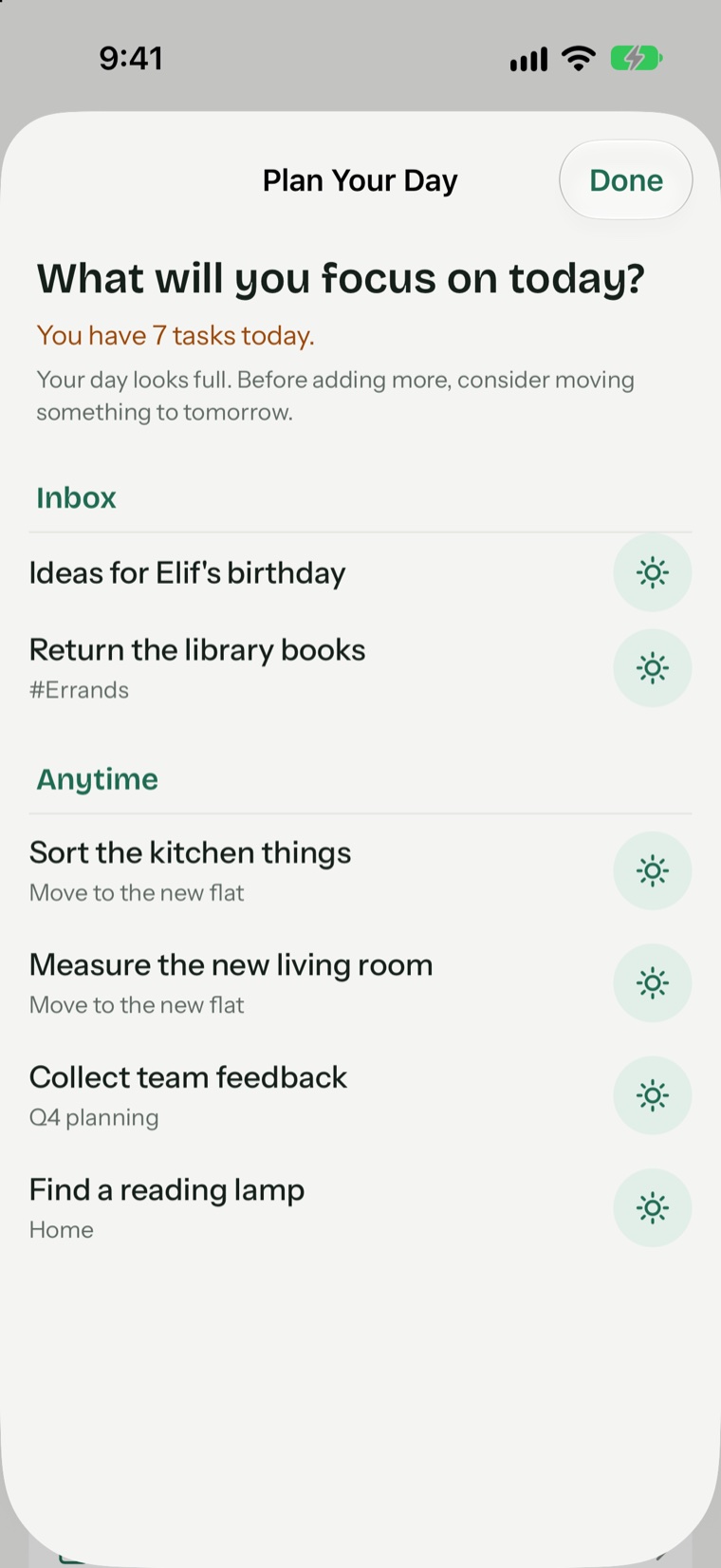
This is the step most plans skip. Look at your meetings and appointments and see how many hours are really free. Most people overestimate what fits in a day, so if your list would need ten hours and you have five, move tasks now rather than failing at them later. As a rule of thumb, five or six real tasks is a full day.
4. Leave room for the unexpected
Plan about 70 percent of your free time and leave the rest empty. Something will come up. An empty slot lets you absorb it without the whole plan falling apart.
5. Close the day in five minutes
In the evening, tick off what you did, move what you did not and pick the first task for tomorrow. Starting the next morning with a decision already made is the easiest way to keep the habit.
A sample daily plan
Here is what a realistic plan looks like for someone with a few meetings. It has one main task, two smaller ones and a free slot.
| Time | What | Type |
|---|---|---|
| 9:00 | Write the proposal draft | Main task |
| 11:00 | Team meeting | Fixed |
| 13:30 | Reply to the two urgent emails | Small task |
| 14:30 | Free slot for whatever comes up | Buffer |
| 16:00 | Book the dentist | Small task |
| 17:30 | Close the day, pick tomorrow's first task | Review |
If your day falls apart anyway
Some days will. Do not rewrite the plan from scratch. Ask which one thing still matters today, do that and move the rest to tomorrow.
How Pineday helps
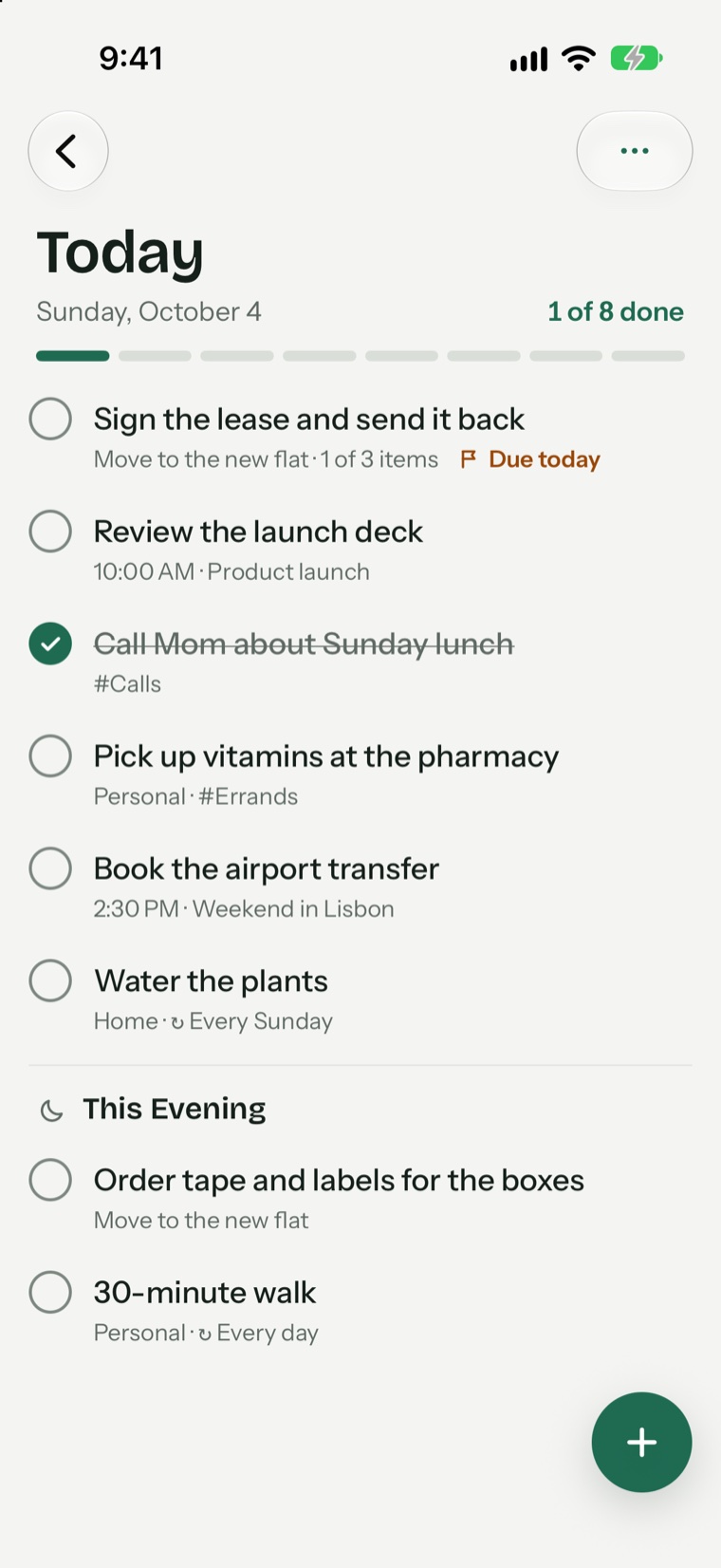
Pineday is built around this routine. The morning plan asks what you will focus on, the Inbox holds everything else, and the app tells you when today is already full. If you want to try it, it is free to start.
Questions and answers
When should I plan my day?
Either the evening before or in the first ten minutes of the morning, before you open email. Pick one and keep it the same.
How many tasks should be on a daily to-do list?
One to three that really matter, and no more than five or six in total. If the list is longer, some of it belongs on another day.
Is a paper planner or an app better?
Whichever you will keep using. Apps are better at repeating tasks and moving things between days; paper is better at keeping you off your phone.
Try Pineday on your own day.
Free on the App Store for iPhone, iPad and Mac. No account needed.
- iPhone
- iPad
- Mac